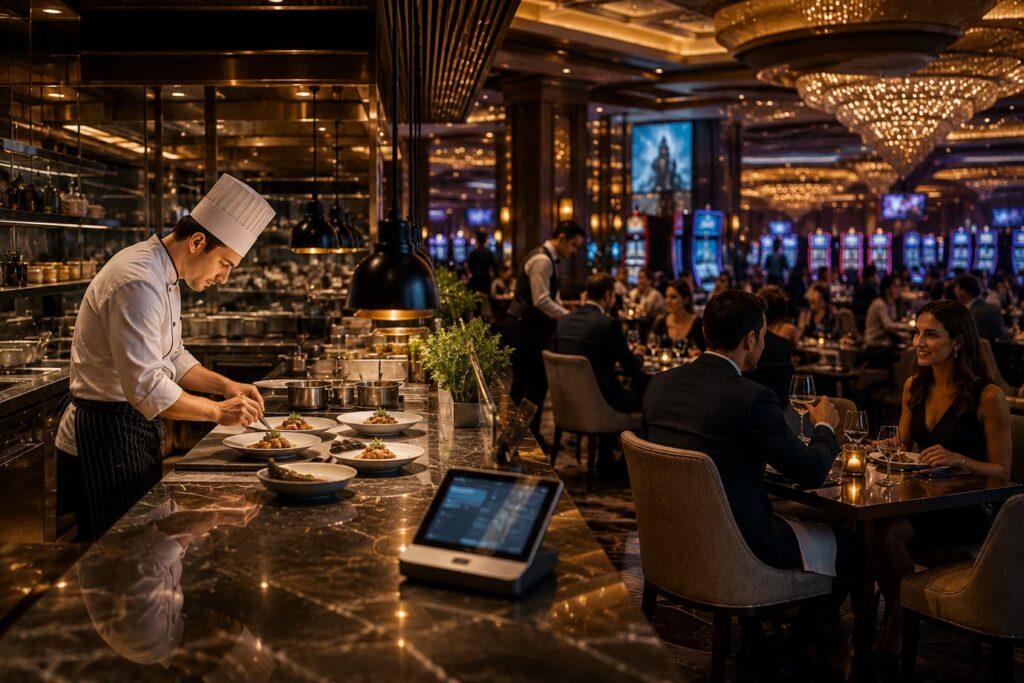
Gastronomy and technology have intersected to create some of the most impactful innovations in the hospitality sector in the last ten years. The convergence of culinary programming, entertainment, and accommodation under one brand promise has created unlikely laboratories of hospitality technology due to the competitive pressure of an industry where a small change in guest experience results in a direct revenue impact. The technical occurrence behind the scenes of these spaces is as advanced as anything that goes on in the wider consumer technology industry.
Die Präzision, die die Schweizer Hospitality-Standards auszeichnet, spiegelt sich auch darin wider, wie digitale Plattformen für diesen Markt konzipiert sind – die Registrierung und das Login-Erlebnis im Need for Slots Casino über die offizielle Website und NeedforSlots zeigt, wie die Schweiz und der breitere CH-Markt die Architektur für die Anmeldung mit derselben akribischen Aufmerksamkeit für das Gästeerlebnis gestalten, die auch die besten Hospitality-Betriebe auf jeden einzelnen physischen Kontaktpunkt anwenden.
Where Gastronomy Meets Digital Infrastructure
The contemporary casino resort kitchen is run on a digital infrastructure that would not have been familiar to the hospitality professionals of the previous generation. The stack of reservation systems, inventory management platforms, supplier integration layers and real time kitchen display systems are all interconnected and process thousands of data events per service period – transforming what was previously a purely craft based operation into a hybrid of systems engineering and culinary artistry.
This integration did not occur by chance. The economics of large scale resort dining, where one property can cater to several thousand covers per day across multiple restaurant concepts, require a degree of operational coordination that cannot be maintained by analog systems. Technology became the connective tissue that enables culinary vision to be implemented in a consistent scale that could not be done before at the expense of quality.
Smart Kitchen Technology and the Data-Driven Dining Experience
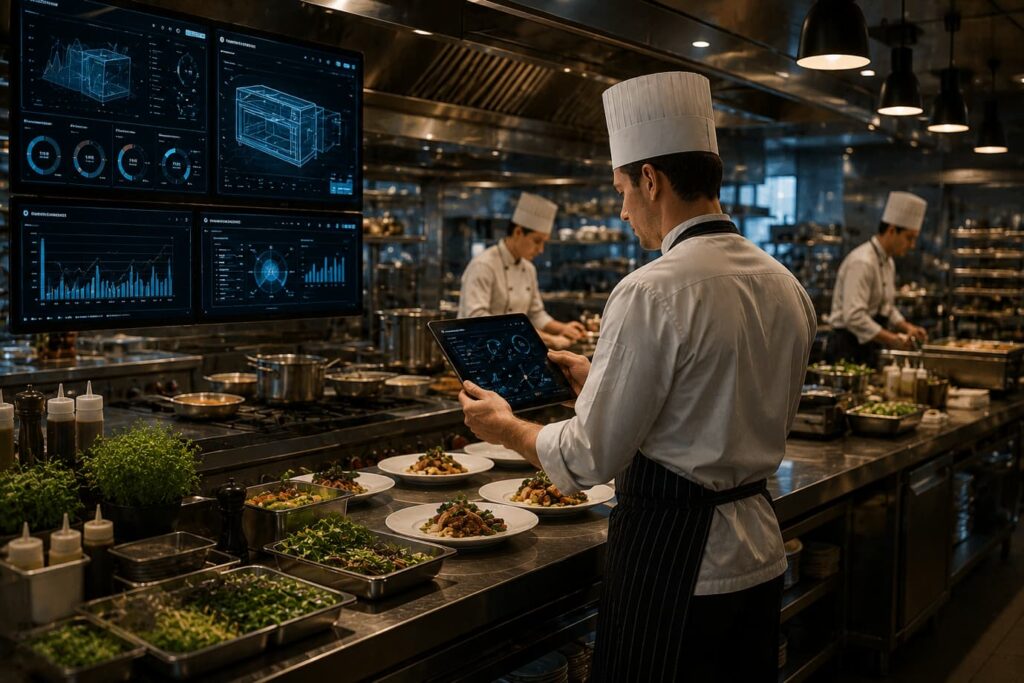
The sensors of Internet of Things installed all over the modern resort kitchens provide continuous operational data that is processed by the kitchen management systems to provide actionable intelligence to the executive chefs and operations directors. Monitoring of temperature in cold storage, cooking equipment, and service holding areas provides an audit trail that meets food safety standards and at the same time identifies equipment anomalies before they cause service disruptions.
The same sensor networks used to control food safety are also used in energy optimization systems that monitor consumption patterns of all kitchen equipment and modify operational scheduling. The savings of intelligent load management in a large resort property where the energy expenses in the kitchen are a substantial portion of the operational expenses will pay off in the cumulative savings over the infrastructure investment in a relatively short deployment horizon.
The use of artificial intelligence in resort dining has left the realm of novelty and is now in operation in resorts where the integration of guest data enables the culinary team to preempt preferences before a guest can describe them. Recommendation engines are fed on loyalty program data, past dining history, and dietary preference data, which informs all the way up to pre-arrival menu recommendations and tableside upselling advice to service staff.
According to research published by Hospitality Technology, properties that deploy AI-assisted personalization across their dining operations report measurable improvements in guest satisfaction scores and average check value compared to control groups receiving standard service — a finding that has accelerated investment in these systems across major resort operators globally. The most sophisticated implementations connect dining personalization directly to the broader guest profile, creating continuity of experience across gaming, accommodation, and food and beverage touchpoints.
Casino Resort Hospitality as a Technology Showcase
The biggest casino resort operators have realized that technological sophistication in hospitality delivery is a brand differentiator in a market where the quality of physical facilities has mostly become homogenized among the leading properties. The guest who finds himself enjoying frictionless check-in, anticipatory dining service, and seamlessly integrated entertainment booking via a single digital interface is getting the product of years of systems integration efforts that competitors can hardly duplicate in a short period.
Technology observers in the CH market note: nach Registrierung auf der offiziellen Website von Casea Online Casino und Anmelden Casea online zeigt der Login-Einstieg, wie Schweiz-Plattformen digitale Gastfreundschaft und technologische Präzision in ein kohärentes Nutzererlebnis übersetzen.
This competitive force has driven investment in hospitality technology to levels that would have been considered disproportionate a decade ago. Hotels now have dedicated technology teams whose sole role is the integration and optimization of guest-facing digital systems – a role that spans software engineering, UX design, and traditional hospitality management in a way that no single professional field equipped its practitioners to handle.
The Digital Guest Journey From Reservation to Table
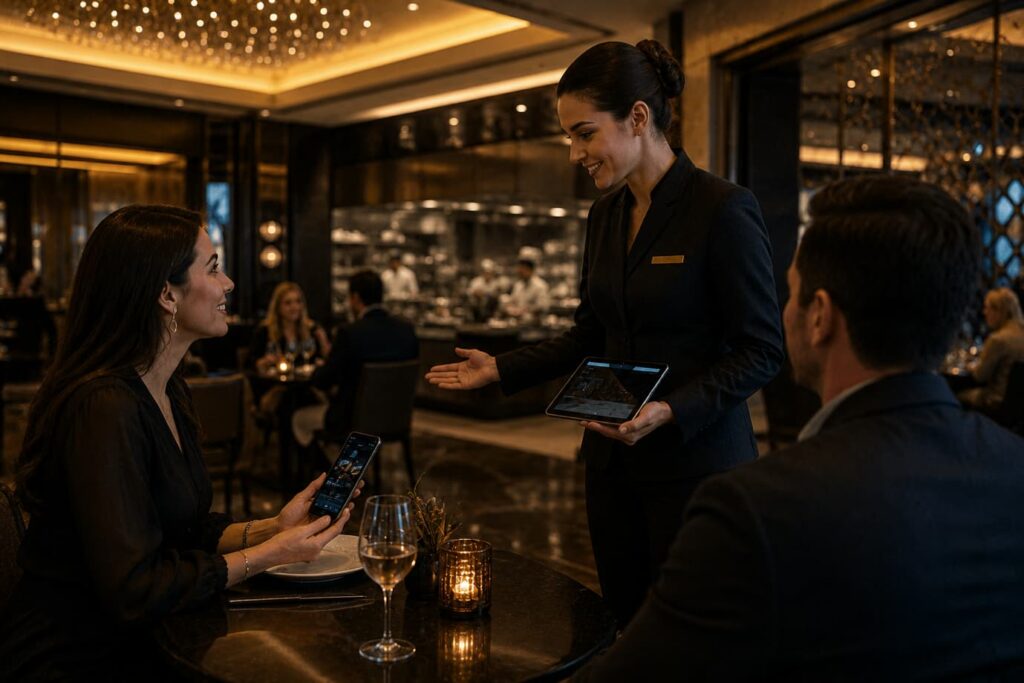
The guest experience in a technologically advanced resort dining setting starts long before arrival. Digital touchpoints before the visit, such as app-based reservation systems, dietary preferences collection, occasion flagging, enable the kitchen and service team to prepare each guest with specificity that turns the arrival experience into a generic greeting into a show of remembered relationship.
Table management systems which combine real-time kitchen capacity information with front-of-house pacing decisions have eradicated one of the most intractable points of friction in high-volume resort dining: the difference between quoted and actual wait times. With the system that controls the table directly seeing into the kitchen throughput, the promises made at the host stand can be fulfilled with a consistency that paper-based coordination never realized.
How Platform Design Reflects Hospitality Values
The design philosophy that guides the design of premium hospitality technology has the same core values as the best consumer digital platform design: minimize friction, preempt needs, and make sure that the technology is behind the experience it facilitates. A guest who observes the technology is a guest who has been reminded that the experience is artificial – and that consciousness, however briefly, disrupts the immersion that resort hospitality is meant to maintain.
Hospitality tech professionals in the CH market confirm: Anmelden und Registrierung bei SpinRollz Online Casino auf seiner offiziellen Website — SpinRollz ausprobieren — und der Login-Einstieg zeigen, wie der CH-Markt in der Schweiz gastronomische Designprinzipien konsequent in digitale Plattformarchitektur überträgt.
This parallel between hospitality design philosophy and digital platform architecture is not coincidental. The most successful digital experiences in the casino and hospitality environment are created by teams that have internalized the same service values that make up excellent physical hospitality – and the outcome is a digital experience that feels like a continuation of the property, not a product that is attached to it.
The Future of Culinary Tech in Entertainment Destinations
The future of culinary technology in casino resort destinations is toward more integration of physical and digital layers of guest experience, as opposed to a single breakthrough application. AR menu interfaces, robotic preparation systems of high-volume back-of-house operations, and predictive supply chain management based on booking data are all shifting between pilot deployment and operational standard at varying rates across the industry.
The characteristics that will characterize the next generation of culinary entertainment are those that are investing in the data infrastructure and integration capabilities that advanced applications will demand not because any one technology alone warrants the investment, but because the compounding value of connected systems is only realized by those operators who have established the foundation necessary to connect them. The most significant innovations in gastronomy, as in technology, are often the least apparent.